What a Public Stainless Steel Monument Offers the Modern City
A public stainless steel monument is the contemporary material answer to the oldest ambition in public sculpture, the ambition to make memory and meaning permanent in the places where people live. Stainless steel brings a brilliance, a strength and a freedom of form that no traditional material can match, and a well-fabricated stainless work can hold its beauty against the weather for decades with a fraction of the maintenance that bronze or painted steel demands.
This guide explains what makes stainless steel such a powerful material for public monuments, the grades, finishes and fabrication standards that decide whether the work stays beautiful, and how to specify, inspect and care for a public stainless steel monument. Our studio has created stainless landmarks across 23 countries since 2003, including monumental works of ten metres and beyond, and the guidance below comes from those builds.
See stainless landmarks in the project gallery, the stainless fabrication services in our services overview and a monumental stainless gateway such as Peach Blossom.
Why Stainless Steel Suits the Monumental Commission
Stainless steel has transformed public monument design because it combines properties that used to force a choice between them. Its strength allows forms that soar, span and cantilever far beyond the reach of bronze or stone, so designers can create open, airy, seemingly weightless compositions that would be structurally impossible in traditional materials; its corrosion resistance, in the right grade, lets those forms stand in public weather with minimal maintenance; and its surfaces, from mirror to satin to coloured finishes, give the designer a palette that catches the sky, the trees and the passing city and changes with the light and the seasons. No other material offers that combination of freedom, permanence and beauty.
Stainless also speaks the visual language of the modern city. It is the material of the contemporary architecture that surrounds most public monuments, so a stainless work belongs naturally to its context in a way that an older material must work harder to achieve, and its associations with precision, technology and progress suit the stories of science, industry and modernity that many communities want their monuments to tell. The material is not merely durable; it is meaningful, and that double value is why it has become the default choice for so many of the world's newest landmarks.
Choosing the Grade and the Finish for the Site
The durability of a public stainless steel monument is decided by the grade and the finish, and the specification should follow the site's climate rather than habit. The common grades, 304 and 316, both resist corrosion, but 316 adds molybdenum for resistance to chlorides and is the right choice for coastal sites, for regions where roads are de-iced with salt and for industrial atmospheres, while 304 serves most inland and urban settings. The grade should be written into the contract and verified by mill certificates, because the difference between the grades is invisible to the eye and fatal to the finish if the wrong one is installed.
The finish determines the work's appearance and its tolerance of its environment. A mirror finish gives the brilliant reflections that make stainless landmarks so photogenic, but it shows every mark and must be washed regularly; a satin or brushed finish softens the reflections and hides the everyday fingerprints while still catching the light; a bead-blasted or textured finish diffuses the light and suits large surfaces; and colour can be added through PVD coating or painted systems, at the cost of a maintenance regime that the bare metal never needs. The designer should choose the finish for the site's light, the owner's maintenance capacity and the work's intended character, and should approve it on samples rather than in renderings.
| Finish | Character | Care it needs |
|---|---|---|
| Mirror | Brilliant reflections, landmark presence | Regular washing, careful handling |
| Satin and brushed | Soft light, forgiving of marks | Modest cleaning, uniform grain care |
| Bead-blasted and textured | Diffused light, suited to large areas | Standard cleaning, texture protection |
| Coloured PVD and painted | Full colour range, added expression | Coating maintenance and renewal |
The Craft of Fabricating Stainless Steel
Stainless steel is among the most demanding materials to fabricate well, and the quality of a public stainless steel monument is decided in the workshop by skills that take years to master. Large plates must be rolled and formed to the required curvature without buckling; the sections must be welded with the correct process and gas shielding, because contamination turns stainless from corrosion-resistant to rust-prone; and the welds must be ground and finished until the joint is invisible in the chosen surface, a discipline that is hardest in mirror work, where every error is reflected back at the viewer. The fabrication also risks damaging the material itself, because carbon steel grinding dust embedded in stainless becomes rust, so the workshop must separate its stainless work from its carbon steel work with real discipline.
Distortion control is the other great craft of stainless fabrication. Welding introduces heat that makes large thin sections move, buckle and oil-can, and a workshop that does not control that movement produces a surface that ripples like water no matter how carefully it was polished. The fabricator should build the work with stiffening, sequenced welding and heat management, and should measure the growing form against the 3D model at defined stages, so that the finished monument is true to the design and stable in the wind. The client should audit these controls in the workshop, because a stainless landmark that is badly made reveals its failures more cruelly than any other material.
Designing the Stainless Form for Light and Structure
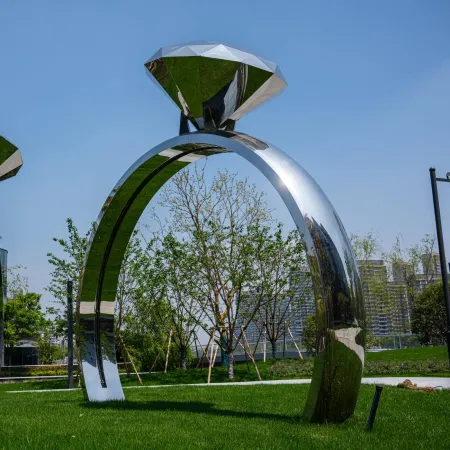
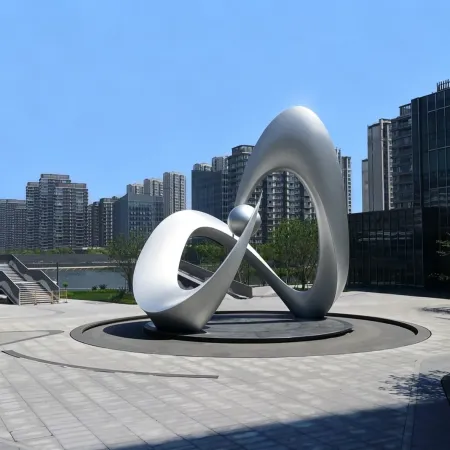
The design of a public stainless steel monument should exploit what the material does best: form that plays with light, structure that expresses itself and a presence that changes with the world around it. A mirror surface can be shaped to reflect the sky, the trees and the passers-by, making the work a living part of its environment; a satin form can be modelled so that the light slides across its curves, revealing the geometry as the sun moves; and a composition of polished ribbons, spheres or blades can catch and throw light in ways that give the monument a life no static surface can match. The orientation and the surroundings should be studied, because stainless rewards the designer who knows where the light will come from.
The structure behind the stainless skin must be engineered with the same care as the surface, because a large stainless monument is a building as much as a sculpture. The internal frame must carry the wind and the public loads while allowing the skin to expand and contract with the temperature without buckling; the connections must be detailed to avoid bimetallic corrosion where stainless meets other metals; and the whole must be accessible for inspection, because the beauty of the surface should never hide a structure that cannot be checked. We design stainless monuments as engineered assemblies, with the skin, the frame and the foundations considered as one system, and that integration is what lets the works stand for decades without drama.
Caring for the Stainless Landmark
The maintenance of a public stainless steel monument is simple but not optional, because even stainless needs help to stay stainless. The work should be washed periodically to remove the deposits that can stain or pit even a corrosion-resistant surface, more often in coastal, industrial or heavily visited sites; the cleaning should use the right agents, avoiding the chlorides and the abrasives that attack the finish; and the work should be inspected annually for the small damages, the scratches, the embedded contamination and the failed sealants, that, left untreated, become rust. The regime is modest, and it is the price of the material's extraordinary freedom.
The studio should hand over the knowledge that keeps the work beautiful: the grade and finish specification, the cleaning agents and methods that suit the surface, the repair techniques for scratches and the contact for future support. A stainless monument that is understood is a monument that is maintained, and a monument that is maintained is a monument that still gleams when the surrounding buildings have been repainted twice and the original committees have passed into history. We provide that dossier with every stainless work we deliver, because a public stainless steel monument is a promise of permanence, and permanence is kept by the people who know how to care for it.
- Specify the grade for the site, 316 for coast and de-icing.
- Approve the finish on samples, viewed in the site's light.
- Audit the stainless workshop for separation and weld shielding.
- Check distortion control against the 3D model at milestones.
- Wash on a schedule and inspect the small damages yearly.
What Stainless Steel Commemoration Delivers
Forms that soar beyond traditional materials
Surfaces that mirror the life of the city
Decades of weather with modest care
A material voice that fits the modern city
Frequently Asked Questions About Public Stainless Steel Monuments
Which stainless grade should a monument use?
316 for coastal, de-iced and industrial sites because its molybdenum resists chlorides, and 304 for most inland and urban settings, with the grade written into the contract and verified by certificates.
Does stainless steel ever rust?
Stainless resists corrosion rather than being immune, and it rusts when the wrong grade meets chlorides, when carbon steel contamination embeds in the surface or when deposits are left to attack the finish.
What finish is best for a stainless landmark?
Mirror for brilliant reflections with regular washing, satin for softer light with less care, and textured or coloured finishes for specific effects, chosen on samples in the site's light.
Why is stainless harder to fabricate than other metals?
It demands shielded welding to stay corrosion-resistant, separation from carbon steel to avoid embedded rust and strict distortion control, and every error is reflected back in the finished surface.
How do I maintain a stainless monument?
Periodic washing with the right agents, more often in demanding environments, plus an annual inspection for scratches, embedded contamination and failed sealants, treated before they become rust.
A public stainless steel monument is the modern city's way of making permanence brilliant, a work that mirrors its surroundings, outlasts its trends and carries its meaning in a material the future will still understand. Specify the grade for the site, approve the finish on samples, audit the stainless craft and wash on a schedule, and the monument will gleam for decades.
If you are considering a public stainless steel monument and want to see the grades, finishes and fabrication standards we hold, our studio will prepare finish samples for your site and walk you through a stainless build in progress.