What Outdoor Art Installation Design Must Solve Before the Work Goes Outside
Outdoor art installation design is public art under full exposure: no roof, no climate control, no guard, and an audience that includes weather, wildlife, maintenance machines and the most energetic members of the public. A work that succeeds outdoors must therefore be designed as a system — form, structure, foundation, material, drainage and maintenance all resolved together — because the outdoor environment forgives nothing and celebrates everything that was planned well. Yifeng Sculpture Studio has designed outdoor art installations for parks, plazas, waterfronts and campuses since 2003, and this guide covers the disciplines that keep outdoor work beautiful for decades rather than for its opening season.
The sections below cover site and climate analysis, structural foundations, material selection for full exposure, drainage and detailing, public interaction and the maintenance plan every outdoor work deserves.
Outdoor art has one advantage that indoor art never enjoys: the environment becomes a collaborator. Light changes the work through every hour, seasons rewrite its mood, and weather gives it a life no gallery can offer. The design task is to invite that collaboration while engineering against its excesses.
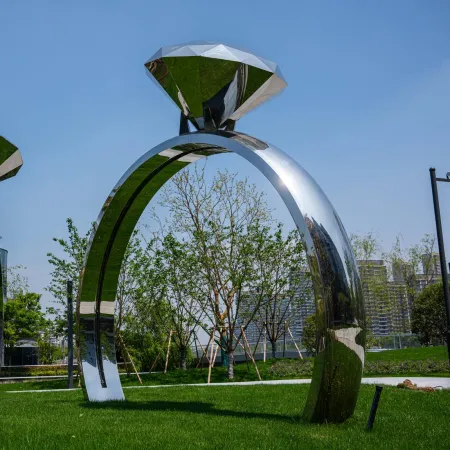
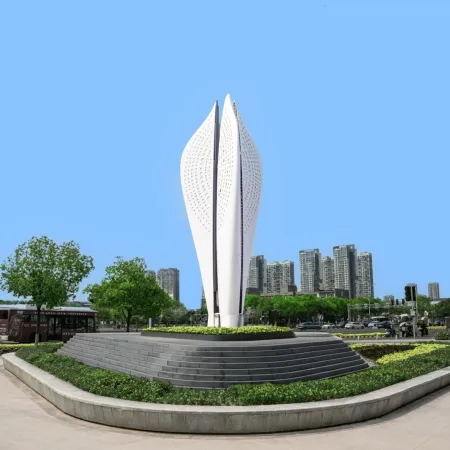
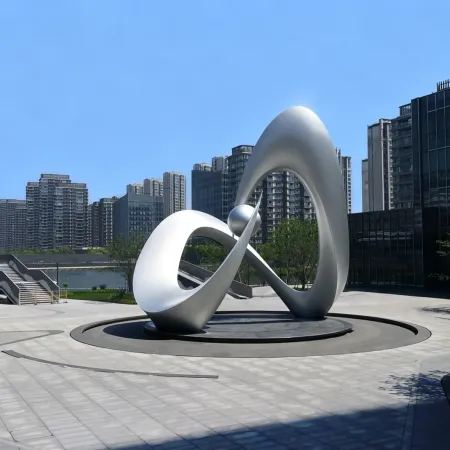
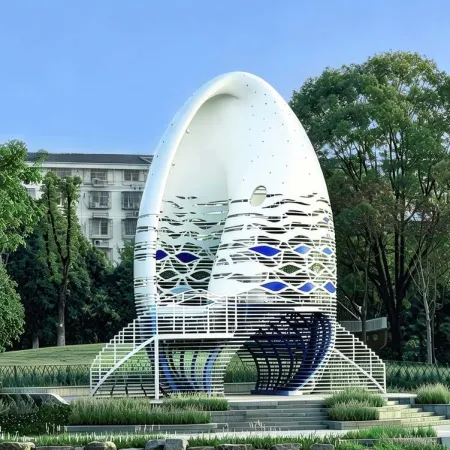
The services overview shows how site analysis opens every commission, Wind Sail demonstrates outdoor form responding to its environment, and Fishing Song at Dusk shows a site-specific work living comfortably in the landscape.
Reading the Outdoor Site Before Designing the Work
Outdoor art installation design begins with a forensic study of the place the work will live. What are the extremes — the hottest summer surface temperature, the coldest winter night, the windiest month, the heaviest rain event? Does the site drain, flood or hold snow? Is it exposed to salt air, road salt, sprinklers or agricultural spray? Who will maintain the landscape around the work, and with what machines? Each answer feeds the design: wind shapes structure, temperature swings demand expansion detailing, salt dictates alloys, and sprinklers decide where irrigation must never reach. A designer who reads the site this thoroughly produces work that looks inevitable; one who skips the reading produces work that looks beautiful in the render and betrayed by the first winter.
Structure and Foundation: The Invisible Half of Outdoor Work
Every outdoor artwork is a small structure, and the ground it stands on is part of the design. Wind loads must be calculated for the actual height, shape and location of the work — a tall slender piece in an open plaza sees forces a low compact piece never meets — and the foundation must be engineered to resist overturning and to behave well in the site's soil. We coordinate foundations with the landscape and civil teams so the base disappears into the design rather than fighting it, and we verify ground conditions before fabrication so the engineering matches reality. The invisible half of outdoor design is where most long-term failures start, and it is where a serious studio spends serious attention.
| Outdoor Force | Design Response | Failure If Ignored |
|---|---|---|
| Wind | Structural analysis, stiffening, foundation mass | Overturning, fatigue, deflection damage |
| Water | Drainage paths, sealed cavities, elevated bases | Internal corrosion, frost damage, staining |
| Sun and heat | UV-stable finishes, thermal expansion joints | Fading, coating failure, buckling |
| Salt and chemicals | Alloy selection, protective coatings, isolation | Corrosion that no aesthetic can hide |
Material Selection for Full Exposure
Materials for outdoor art are chosen on a different scale of honesty than indoor work, because there is no environment to protect them. Stainless steel and aluminum lead for corrosion resistance; weathering steel offers a self-protecting patina where its runoff can be managed; powder-coated steel brings color that survives ultraviolet exposure far better than ordinary paint; and bronze ages with dignity where tradition suits the site. Beneath the visible surface, the detailing decides the outcome: every hollow form is ventilated or sealed against trapped water, every dissimilar-metal junction is galvanically isolated, and every fastener is chosen to outlast the finish around it. The material conversation for an outdoor art installation is a fifty-year conversation, and we hold it with that horizon in mind.
What Our Studio Delivers With Every Outdoor Design
Site and climate analysis completed before concept design begins
Structural and foundation engineering coordinated with civil teams
Materials and detailing specified for fifty years of full exposure
Designing for People, Weather and Machines
Outdoor work lives among people who will touch it, sit on it, photograph it and test it — and among machines that will mow, sweep, wash and occasionally bump into it. The design must therefore be robust to affection and to accident: edges radiused, climbing surfaces engineered for the load of children, bases protected from mowers, and finishes chosen to forgive the occasional scuff. Where seating or shelter is part of the concept, the ergonomics must be real, because a bench that looks sculptural but sits badly will be judged every day. Outdoor art installation design that honors its daily users earns the care of its community, and that care is the most powerful maintenance program a public work can have.
Drainage and Detailing: The Quiet Longevity Factors
Water is the most persistent enemy of outdoor sculpture, and drainage is the cheapest defense against it. Every horizontal surface sheds water; every hollow form breathes or drains; every base lifts the work clear of soil and standing water; and every junction is detailed so moisture cannot hide. We draw the water paths through a sculpture the way an architect draws them through a building, because a work that sheds water effortlessly will outlive one that traps it by decades. The same discipline covers thermal movement — long metal spans expand and contract with temperature, and joints must absorb that motion without cracking finishes or straining welds. These quiet details never appear in photographs, but they are the difference between a landmark that endures and one that fails invisibly from within.
Lighting deserves a place in the outdoor design conversation, because an outdoor art installation lives half its life after dark. The design should ask what the work becomes at night — whether lighting reveals its form, casts dramatic shadow, marks a route or simply lets the piece remain present rather than vanishing into the dark. Fixtures must be specified for outdoor exposure, concealed so daylight views stay clean, and engineered with access for relamping that does not require shutting down the site. Where the site is sensitive to light, the program should dim late rather than blaze all night. The daylight form and the nighttime presence are two acts of the same work, and outdoor art installation design that treats them as one system produces a landmark that works around the clock.
A final outdoor discipline is planning for the work's whole life, including the unglamorous chapters. The design should anticipate how the piece will be cleaned, inspected, repaired and — one distant day — responsibly removed or relocated, and it should make each of those operations possible without destroying the work or the landscape around it. Access points, disassembly paths, documentation and a maintenance schedule written for the owner's team all belong to this chapter. Outdoor art that is designed with its entire biography in mind is easier to love, cheaper to keep and more likely to be treasured by the generations who inherit it, which is the quietest and highest ambition of public sculpture.
Frequently Asked Questions About Outdoor Art Installation Design
How long does outdoor artwork last?
Designed for its specific climate and maintained on a simple schedule, outdoor art is measured in decades — many of the world's most durable public works are outdoor metal sculptures built with exactly this discipline.
Can any design be built for outdoors?
Almost any form can be engineered for outdoor life, but the design may need to evolve — materials change, structures stiffen, details adapt. The honest studio tells you during design, not after fabrication, what outdoor reality requires of your concept.
What maintenance does an outdoor work really need?
A written schedule of washing, inspection and, where specified, recoating — modest and predictable when materials were chosen for the site. The manual we deliver tells the owner exactly what to do and when, in plain language.
How do you protect outdoor work against vandalism?
With design rather than paranoia: robust surfaces that resist casual damage, finishes that are easy to restore, and forms that give energetic visitors a sanctioned way to engage. The most respected outdoor works are loved because they were designed to be lived with.
What information should we bring to start an outdoor project?
Site drawings or clear photographs, a sense of the ground and drainage conditions, the climate realities of the location, and the story or feeling you want the work to carry. From that material a serious studio can begin the reading that shapes everything else.
Outdoor art installation design rewards patience with permanence: the site read carefully, the structure engineered honestly, the materials matched to the climate and the details drained and ventilated will produce a work that still looks right when the trees around it have grown twice their height. If your landscape, plaza or waterfront is ready for a piece that lives with the weather instead of fighting it, our studio would welcome the chance to design it — share the place with us, and we will show you how outdoor art installation design turns exposure into character.