Why Commercial Public Art Installation Is a Business Decision, Not a Decoration
A commercial public art installation is an investment in how a building, a complex or a district is experienced, and the developers and brands that treat it as a business decision rather than a decoration are the ones who see it pay. The right work draws visitors, extends their stay and gives a place an identity that marketing cannot manufacture.
This guide explains what a commercial public art installation should deliver, how it is planned for real commercial return and how to commission a work that serves both the brand and the people who use the space. We share the perspective of a studio that has delivered public installations for commercial clients across more than twenty countries.
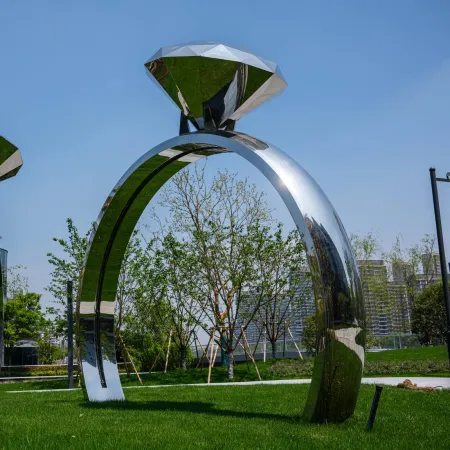
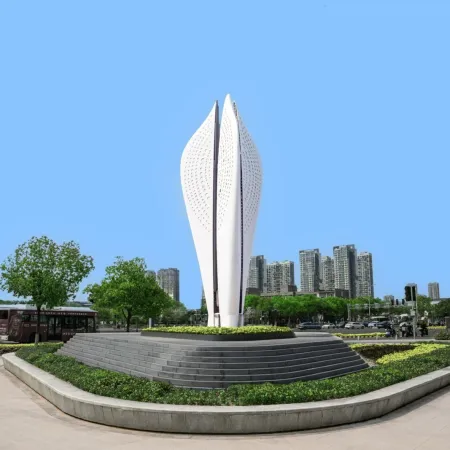
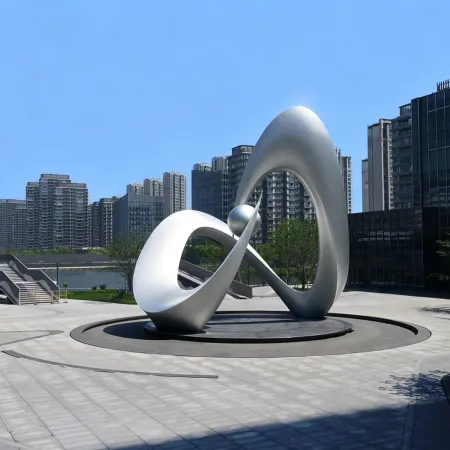
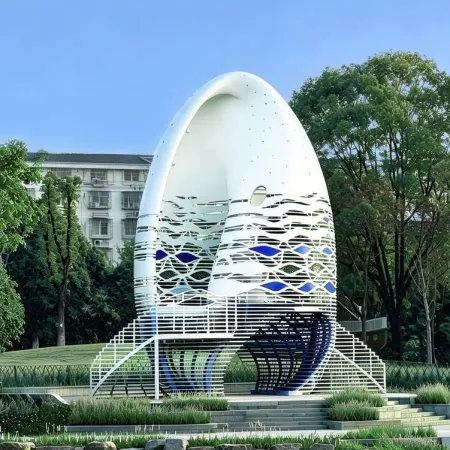
Explore the commercial power of public art in Eye of the Phoenix, The Radiant Galaxy and The Diamond Rings.
What a Commercial Installation Must Earn
A commercial public art installation is not bought for its own sake; it is bought to change behaviour. The clearest returns are footfall and dwell time: a distinctive work gives people a reason to visit, a destination to name and a scene to share, and it slows them down so that the shops, cafés and spaces around it are seen. Developers measure these returns in leasing velocity and foot traffic, and the art that delivers them is planned with the same discipline as the architecture, positioned where people pass, pause and gather rather than hidden where nobody goes.
There is also a softer return that commercial owners have learned to value: identity. In a market where buildings look increasingly alike, a memorable installation gives a development a face, a name in conversation and a reason to be chosen over a competitor across the street. The work becomes part of the brand, photographed, tagged and shared by visitors who would never share a brochure. That earned attention is difficult to buy through advertising and impossible to fake, which is why commercial public art installation has moved from the end of the budget to the centre of the placemaking strategy.
Planning the Work Around the Way People Move
The success of a commercial public art installation depends on where it stands and how it is seen, and the planning must begin with the movement of people through the space. Study the arrival sequence: the entrance that welcomes, the corridor that leads, the plaza where people pause and the seating where they linger. Each point offers a different kind of encounter, from the landmark that announces the place from a distance to the intimate work that rewards those who come close, and a strong commercial programme composes these moments deliberately rather than scattering objects hopefully.
Sightlines and scale belong in the same conversation. A work that reads beautifully in a photograph can vanish in a vast atrium or overwhelm a narrow street, so the design must be tested against the real sightlines of the space, from the entrances, the upper floors and the approach by car and on foot. The work should also change through the day, catching morning light, evening shadow and night illumination, because a commercial environment is experienced at every hour and the installation should earn its place in all of them. Planning the art as part of the spatial choreography is what separates an installation that works from one that merely exists.
The Audience Is Also Your Customer
A commercial public art installation addresses two audiences at once: the public who experience it and the brand that pays for it, and the best work serves both without cheating either. The public will judge the work on its own terms, noticing when a sculpture is merely a logo in three dimensions or a placeholder chosen to fill a space, and they will reward work that feels genuine with attention, photographs and time. The brand is served best when the work is so good that it becomes the brand, when people name the place by its art and remember the experience long after they have left.
This balance is easier to describe than to achieve, and it is why the commissioning process matters. A work chosen purely by a marketing committee tends to look like a decision made by committee, while a work chosen purely by artists can ignore the commercial realities that pay for it. The strongest commercial installations are developed through a dialogue in which the artist understands the business goals and the client understands the artistic process, so that the brief, the site and the budget are shaped together. When the two audiences are both respected, the installation becomes a genuine meeting point between commerce and culture.
| Commercial goal | What the art contributes | How success is felt |
|---|---|---|
| Footfall | A destination worth visiting | New visitors arrive to see it |
| Dwell time | Reasons to pause and linger | Visitors spend longer on site |
| Identity | A face the place is known by | The place is named by its art |
| Shareability | A scene people photograph | Earned attention spreads online |
| Tenant appeal | A richer place to locate in | Leasing becomes easier and faster |
Interactive Elements That Build Attachment
Some of the most successful commercial public art installation projects invite the public to take part, because participation turns a viewer into a participant and a participant into an advocate. Interactive works may respond to movement, sound or touch, offer seating within a sculpture, cast shadows that visitors complete with their own bodies or change through the day, and each moment of participation creates a memory tied to the place. Children especially adopt interactive works, and families who return so the children can play with the art become some of the most loyal customers a commercial destination can have.
Interaction must be engineered honestly, because a work that promises response and fails it disappoints more than a static work ever could. The moving parts need maintenance plans, the interactive elements need robust construction that survives enthusiastic public use, and the safety of children must be designed in from the first sketch. A commercial owner should ask what the interaction will feel like in year three, not just on opening day, and should choose a partner who will stand behind the work as it ages. Done well, interactive public art becomes a fixture of daily life that people protect because they love it.
Lighting, Materials and the Night Economy
A commercial public art installation earns much of its return in the evening, when the work is lit, the restaurants are full and the space becomes a stage, so lighting should be designed as part of the sculpture rather than added afterwards. The lighting plan should consider how the work appears after dark from every important viewpoint, how it relates to the architectural lighting around it and how it can be maintained without disturbing the art. Some installations are designed around light itself, using illuminated surfaces or integrated fixtures to create a presence that changes through the night.
Materials carry the same long view. Commercial sites are busy and exposed, and the work must tolerate weather, cleaning, casual contact and the occasional hard knock without losing its presence, so the specification should favour durable alloys, robust finishes and construction that can be repaired in place. The maintenance conversation should happen at the design stage, because a finish that needs specialist care every month is a liability whatever its beauty. A commercial installation that still looks confident in its fifth year is one that was specified with the fifth year in mind, and that foresight is what protects the original investment.
What Commercial Art Should Deliver
A destination that draws and holds people
An identity the place is known by
Interaction that builds lasting attachment
Materials engineered for year five and beyond
Commissioning a Work That Serves the Brand
The commissioning process shapes the outcome more than any single design decision, and a commercial owner should approach it with clear intentions. Define first what the installation must achieve for the business, in terms of visitors, identity or experience, and share that brief honestly with the studios you invite; then give the chosen studio room to respond with ideas rather than asking them to execute a concept you have already fixed. The best commercial works usually arrive as a surprise, an idea the client did not know they wanted until the studio showed it, and a brief that is too tight starves that moment.
The studio you choose matters as much as the idea. Look for a team that can hold the whole journey, from concept through engineering and fabrication to installation, because the handovers between separate suppliers are where commercial projects lose their polish, and ask to see installed works in environments similar to yours rather than only studio photographs. Our studio has delivered commercial public art installation across more than twenty countries since 2003, and the projects that served their owners best were those where the business goals, the site and the artistic vision were aligned from the first conversation and carried through to the last bolt.
Measuring the Return on Your Installation
A commercial public art installation should be measured like any investment, and the measures begin before the work is designed. Agree what success looks like, whether it is foot traffic past a certain point, photographs shared under a hashtag, media coverage, tenant enquiries or the simple observation that people now meet at the sculpture, and collect the baseline before installation so the change can be seen. After the work is live, revisit the measures at three months, a year and beyond, because the value of public art tends to compound as the work becomes part of the place.
Some returns resist easy measurement, and the owner should be honest about that too. The sense of quality a well-chosen installation lends to a brand, the pride it gives the people who work and shop there, and the message it sends about the values of the developer are real assets even when they do not appear in a spreadsheet. Commercial public art installation is an investment in both the immediate experience and the long reputation of a place, and the owners who understand both horizons are the ones who commission the works that define their districts for a generation.
Frequently Asked Questions About Commercial Public Art Installation
Does public art really increase commercial returns?
Placemaking studies and developer experience consistently show that distinctive art draws visitors, extends dwell time and strengthens identity, and the returns compound as the work becomes part of the place.
What kind of work suits a commercial site?
Work that matches the scale and movement of the space, survives heavy public use and rewards the site's visitors. Landmark pieces anchor arrival points while intimate works reward the spaces where people linger.
How early should art enter a development project?
As early as possible. When the art is planned with the architecture and landscape, sites can be shaped for it, and the budget and approval process run far more smoothly than when art is added at the end.
Who maintains a commercial installation?
The owner maintains it, ideally guided by a maintenance plan from the maker. Choose materials and finishes whose care routine your team can realistically follow, and schedule regular inspections from year one.
Should the work carry the brand or the brand carry the work?
The work should be strong enough that people name the place by it. When the art itself becomes the identity, the brand is carried more powerfully than any logo placement could achieve.
A commercial public art installation is a business decision with cultural consequences, and the owners who succeed treat it with the seriousness of both. Plan the work around real movement and real returns, choose a studio that can carry the whole journey, engineer the piece for the fifth year as well as the opening day, and measure the outcome with the same discipline you apply to any investment. The result is a place that draws people, holds them and becomes known by its art, and a commercial public art installation that delivers that is not a cost but one of the best investments a developer can make.
Choose a commercial public art installation that serves both your brand and your visitors, and your space will be remembered for what it became.