Why Sculpture Design for Public Space Is a Civic Discipline
Sculpture design for public space is a civic discipline before it is an artistic one, because the work enters a place that belongs to everyone and must serve people it will never meet. A public sculpture is not chosen by its owner alone; it is adopted or rejected by a whole community, and its success is measured in decades of daily life rather than in a moment of unveiling.
Yifeng Sculpture Studio has practised sculpture design for public space since 2003, delivering more than 3000 works across 23 countries. From plazas and waterfronts to transport hubs and civic districts, our public works are designed with the community's daily life as the central consideration, supported by artistic training from the China Academy of Art, the Academy of Arts & Design at Tsinghua University and the Royal Society of Sculptors.
The Public as the True Client
Sculpture design for public space must consider an audience that cannot be interviewed in a focus group, because the public is every age, every culture and every state of mind that passes through the space. The work must be legible to the hurried commuter and rewarding to the visitor who lingers, safe for the child and dignified for the elderly, striking in daylight and graceful at night, and it must earn its place in the routines of people who will pass it thousands of times.
The designer therefore composes for the long relationship rather than the first impression. A work that is merely surprising will fade as the surprise fades; a work that offers depth, comfort or beauty to the daily passer-by will deepen with familiarity. The finest public sculptures are the ones that give something new on the hundredth encounter, and designing for that repeated gift is the quiet heart of the discipline.
The Dimensions of a Public Design
The table below sets out the dimensions that sculpture design for public space must resolve together, each one a discipline in its own right.
| Dimension | Question it answers | Why it matters |
|---|---|---|
| Site logic | Why does this belong in this exact place? | Site logic makes the work irreplaceable |
| Human flow | How do people move through and pause here? | Flow decides where the work is actually seen |
| Civic meaning | What should this work say for the community? | Meaning earns the community's adoption |
| Durability | How will it face weather and wear for decades? | Durability protects the public's investment |
| Access and safety | Can everyone approach it safely, always? | Public space demands universal welcome |
Designing the Daily Encounter
The daily encounter is the true test of sculpture design for public space. The commuter who passes at 8 a.m., the family who stops at noon, the runner who rounds the corner at dusk and the night worker who walks home at midnight all meet the work in different lights and different moods, and the design should honour each meeting. We study the site at the hours it is actually used, we consider the seasonal changes of light and life, and we compose a presence that serves the whole day rather than a single golden hour.
The work should also invite the small interactions that make public space human. A place to sit at the base, a surface that catches the afternoon light, a form that children naturally circle and adults naturally photograph, these are the quiet invitations that turn a sculpture into a meeting place. When a work provides them, the community makes the sculpture part of its daily rituals, and the sculpture becomes a civic friend rather than a civic ornament.
Working With the City's Systems
- Planning and approvals: public work passes through planning, engineering and sometimes public art commissions, and the design must be prepared to meet each review with clarity.
- Utilities and services: the ground beneath public space carries cables, pipes and drainage, and the foundation must respect what lies below.
- Public maintenance: city crews will care for the work, so the design should suit their equipment, their skills and their budgets.
- Event life: plazas host markets, festivals and gatherings, and the sculpture should enrich those events rather than obstruct them.
- Night lighting: a public space lives after dark, so the work's night presence should be designed with the city's lighting context.
A studio experienced in the city's systems designs with them rather than against them, saving the client months of friction and the public years of problems.
The Proof in Public Adoption
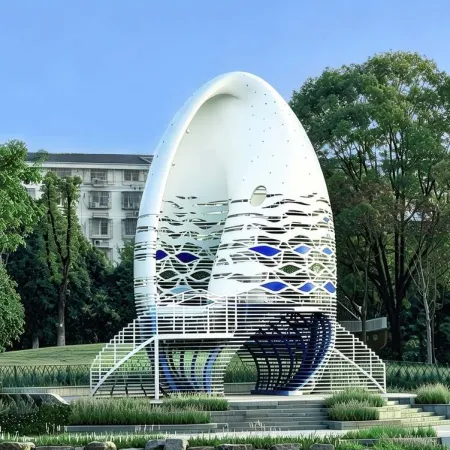
The success of sculpture design for public space is proven in adoption, when a community navigates by the work, gathers at it and defends it. See the works that communities have adopted across our delivered projects in our project gallery, explore the services behind a civic commission on the services overview, and study a work such as Hello Conch, a 12.8-metre interactive shell that has become a gathering point and identity marker for its public space.
What Sculpture Gives a Public Space
An identity the community navigates by
A meeting place woven into daily ritual
Meaning that deepens with every encounter
A presence that serves the space for decades
Commissioning for the Civic Good
Clients commissioning sculpture design for public space should measure success in civic terms, asking what the work will give the community in ten, twenty and fifty years rather than what it will look like in the brochure. The brief should name the public purposes the work serves, the process should give the community a genuine voice and the design should be tested against the real life of the space, because a public sculpture that the community does not adopt is a failure no matter how elegant its form.
We treat every public commission as a trust from the community as much as from the client. Our process brings the public in through genuine consultation, our designs are engineered for the city's care and our delivery is documented for the generations who will maintain the work, because we believe sculpture design for public space is a gift to the future. When that gift is designed with civic discipline, the sculpture becomes part of the city's memory, and that is the highest return a public commission can offer.
Public Process and the Art of Consultation
Sculpture design for public space is strengthened by genuine public consultation, because the people who live with a place know things no designer can discover alone. The consultation should happen early enough to shape the brief, it should ask what the community values about the place and hopes the art will bring, and it should report honestly how those voices influenced the outcome. Done well, consultation builds the adoption that a public sculpture needs before it is even built; done badly, it creates resentment that the finished work will inherit.
The design must also survive the public process without losing its power. Committees, boards and community meetings will question the concept, and the studio should present it with clarity, listen to legitimate concerns and distinguish between feedback that strengthens the work and pressure that would dilute it. We prepare every public commission to move through that process with its integrity intact, documenting the reasoning, testing the scale and articulating the meaning so the people who decide can defend the work to those they represent. A public sculpture that has passed through honest process arrives with a legitimacy no amount of artistic brilliance could give it alone.
The economics of public sculpture also deserve honest design thinking, because public money must serve the public for as long as possible. We engineer our public works for low maintenance and long life, we choose materials that the city's crews can care for with their existing skills and we document every work so its future care is a routine matter rather than a mystery, and that responsibility is part of what we mean when we say sculpture design for public space is a civic discipline.
Frequently Asked Questions About Sculpture Design for Public Space
What is sculpture design for public space?
The discipline of designing sculpture for places owned by everyone, balancing site logic, human flow, civic meaning, durability and universal access.
How do you design for a community you cannot interview?
By studying the real life of the space, consulting genuinely with the community and composing for the daily encounters of every kind of person.
What approvals does public sculpture need?
Planning, engineering and often public art commission review, so the design should be documented clearly enough to pass each scrutiny with its power intact.
How is maintenance handled for public sculpture?
The design should suit the city's maintenance reality and hand over a clear schedule, so the work stays loved rather than becoming a burden.
How do you know a public sculpture has succeeded?
Through adoption, when the community navigates by the work, gathers at it and defends it, the sculpture has earned its place in the public's daily life.
Sculpture design for public space is a gift to the future, and it succeeds when the community adopts the work as part of its daily life and its memory. Choose a studio with civic experience, genuine public process and engineering for decades, and your public space will receive a sculpture that belongs to everyone.
If your public space is ready to receive a work for everyone, tell us about the place and the community, and we will show you what sculpture design for public space can give them.