How a Landmark Public Sculpture Earns Its Place in a City Memory
A landmark public sculpture is public art with an ambition that ordinary commissions do not carry, because it is expected to become part of the city memory, the image people carry of a place and the work that outlives the occasion that produced it. Not every public sculpture becomes a landmark, and the difference is rarely luck; it is the result of a concept rooted in its place, a form strong enough to be remembered, and an execution honest enough to endure. I have spent more than a decade creating landmark public sculpture for clients across twenty-three countries, and this guide explains what separates the works a city adopts from the works it merely tolerates.
We will look at the anatomy of a memorable public work, the relationship between the sculpture and its public, and the commissioning disciplines that give a landmark its best chance.
Our public art archive documents landmark works in their cities, the commissioning services explain the full journey, and the Eye of the Phoenix installation shows how a public work becomes a destination in its own right.
The Anatomy of a Memorable Public Work
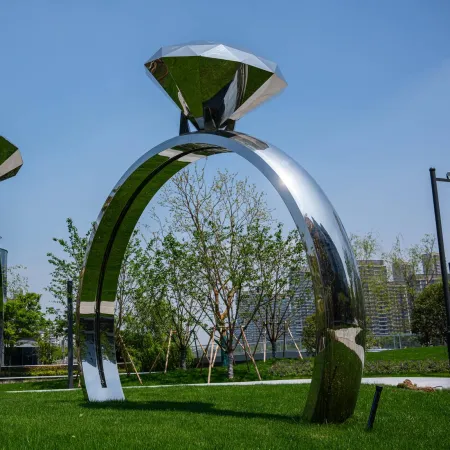
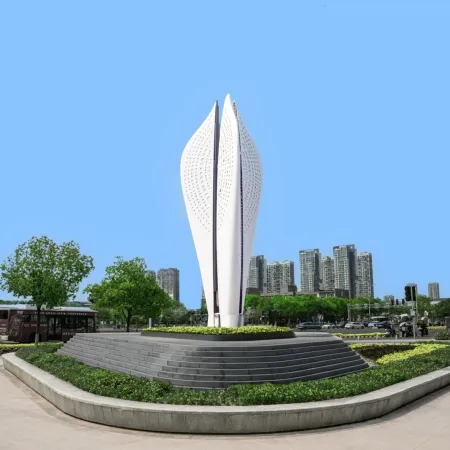
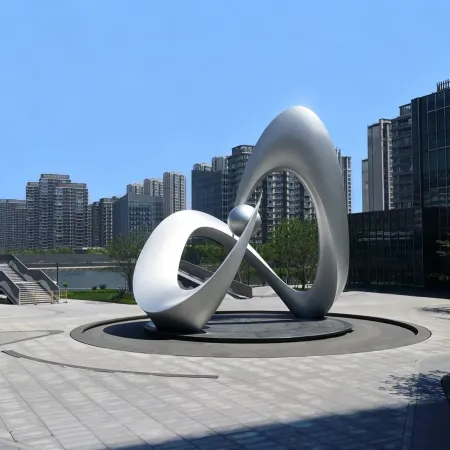
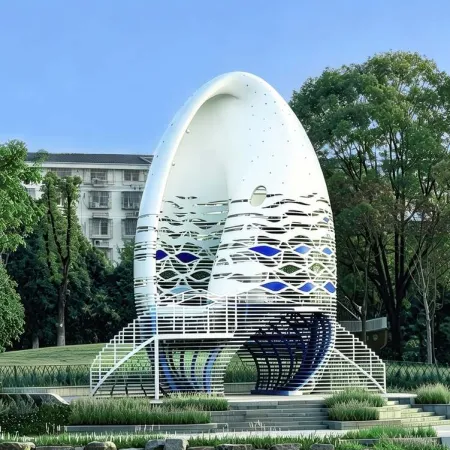
The landmark public sculptures that cities remember share a recognisable anatomy. Their forms are legible at a glance, so that a single image carries the whole idea; their scale answers the civic space rather than the gallery; their material relates to the place and climate; and their meaning is open enough for the public to complete, which lets the work accumulate personal associations across decades. A form that needs a caption to be understood, or a scale that disappears in its setting, can never become a landmark, however fine its intentions.
Memorability also demands a point of view. The works that become landmarks are not neutral decorations; they make a formal statement, celebrate a story, or give a place a gesture it lacked, and that conviction is what people respond to. This is where artistic authorship matters, because a committee of compromises rarely produces a form with the clarity to be remembered. The strongest public landmarks carry the confident hand of an artist who understood the place and was trusted to interpret it.
The Relationship Between Sculpture and Public
A landmark public sculpture is completed by its public in a way that gallery art never is. People photograph beside it, touch it, name it, give it nicknames, navigate by it and build routines around it, and each of those acts adds meaning that the artist could not have predicted. The design can welcome this relationship by offering approachable surfaces, a human scale at the base even when the whole is monumental, and forms that reward both the distant glance and the close encounter. Public sculpture that keeps the public at a distance rarely earns their love.
| Public Act | What It Adds | How Design Helps |
|---|---|---|
| Photographing | Spreads the image of the city | Compose for the camera viewpoint |
| Touching and sitting | Builds personal ownership | Friendly surfaces and base |
| Naming | Gives the work local identity | Leave space for public adoption |
| Navigating by it | Makes it part of city language | Legible from key sightlines |
Community Engagement as Part of the Art
A landmark public sculpture belongs to its community from the moment it is conceived, and the commissioning process should treat the community as a partner rather than an audience. Presenting early concepts, explaining the thinking behind the form, listening to how the site is used and inviting the public to name the finished work all build the sense of ownership that protects a sculpture and makes it loved. Engagement is sometimes feared as a threat to artistic quality, but in practice it sharpens the work by grounding it in the place reality.
The balance between artistic vision and public voice is delicate, and experienced studios manage it with a clear sequence: the artist develops the vision, the public is consulted on the direction, and the final form remains the artist responsibility, informed but not vetoed by opinion. This protects both sides, giving the community genuine influence over what their city gains while protecting the work from being designed by committee. The landmarks that communities love most are usually those where this balance was managed with skill.
Commissioning Disciplines That Protect a Landmark Ambition
Landmark ambition must be protected by ordinary discipline, because a great concept is lost when the process fails. The commission should be managed through defined stages with written approvals, the concept should be tested at scale in its real setting, the engineering should be completed and reviewed before fabrication, and the fabrication should be inspected at milestones. The studio should be chosen for delivered public landmarks rather than promises, and the contract should protect the design through production so that the sculpture the city approves is the sculpture the city receives.
Disciplines Behind a Lasting Public Landmark
A concept rooted in the place and its story
Scale tested in the real setting
Engineering approved before fabrication
Community welcomed into the process
Why Some Public Works Become Landmarks and Others Fade
Time is the final judge of a landmark public sculpture, and the works that survive as landmarks share habits that time rewards. They are robust enough to be maintained rather than replaced; they are legible enough to survive changes in taste; and they are open enough to accumulate new meanings as the city changes around them. Works that depend on a single fashionable reading, or that were built too cheaply to age well, quietly disappear from the city memory even when they remain standing.
Since 2003 our studio has designed and delivered landmark public sculpture across twenty-three countries, and we have watched which of our works the cities adopted as their own. The pattern is consistent: the adopted works are those with clear forms, rooted meanings, honest materials and a genuine relationship with their public. We bring that lesson to every commission, because a landmark public sculpture is not something a studio declares, it is something a city decides.
A landmark public sculpture is a conversation between a city and its future, a work that carries the place story forward and invites every passer-by to add their own chapter. Created with vision, disciplined in execution and welcomed by its public, it earns the only title that matters: the one the city gives it.
The Long Life of a Public Landmark
A landmark public sculpture is commissioned for a life measured in decades, and the decisions made in its first year determine whether that life is long and honourable or short and costly. The materials must be specified for the real climate and the real maintenance budget, because a finish that requires more care than the owner can provide will decline in public view; the structure must be engineered for the site loads and detailed against the water that finds every weakness; and the drainage, access and cleaning regimes must be designed in from the start. A studio that thinks about the twentieth year of the work, asking what it will look like, what it will need and who will care for it, is a studio that treats public sculpture as the long commitment it truly is.
The public life of the landmark also evolves in ways the artist cannot control, and the design should welcome that evolution. Trees will grow and change the setting; buildings will rise and alter the sightlines; the community will attach new meanings to the work as the city changes around it. A landmark that was designed with some openness, formal and interpretive, can absorb these changes and remain vital, while one that was conceived for a single moment will slowly become a relic. The landmarks that cities love for generations are those that were built with an understanding of time, both the weathering of materials and the unfolding of meaning, and that understanding is one of the quiet gifts of an experienced studio.
Frequently Asked Questions About Landmark Public Sculpture
What makes a public sculpture a landmark rather than decoration?
A landmark has a form legible at a glance, a scale that answers its space, a meaning rooted in its place and a relationship with the public. It becomes part of how people navigate, name and remember the city.
How is the public involved in a landmark commission?
Through early concept presentation, consultation on the direction and involvement in naming, while the final artistic form remains the artist responsibility. Engagement builds ownership without design by committee.
How do we choose between abstract and figurative public work?
Figurative work names its subject directly, while abstract work invites interpretation and suits broader civic meanings. The choice follows the story the city wants to tell and the place that will carry it.
What materials last best in a public landmark?
Stainless steel, weathering steel, bronze, stone and engineered composites all serve public landmarks when matched to the climate and maintained. The choice balances the concept, durability and the maintenance budget.
How long does a public landmark commission take?
Most commissions take many months from concept to installed work, with large engineered landmarks taking a year or more. Community consultation, engineering approval and fabrication all need realistic time.
A landmark public sculpture is one of the most enduring gifts a city can give itself, and its success is written across decades of public life. Commissioned with vision, disciplined in execution and welcomed by its community, it becomes the work that tells future generations what this place believed was worth remembering.
Tell us the story your city wants to carry, and we will help you create a landmark public sculpture worthy of it.